
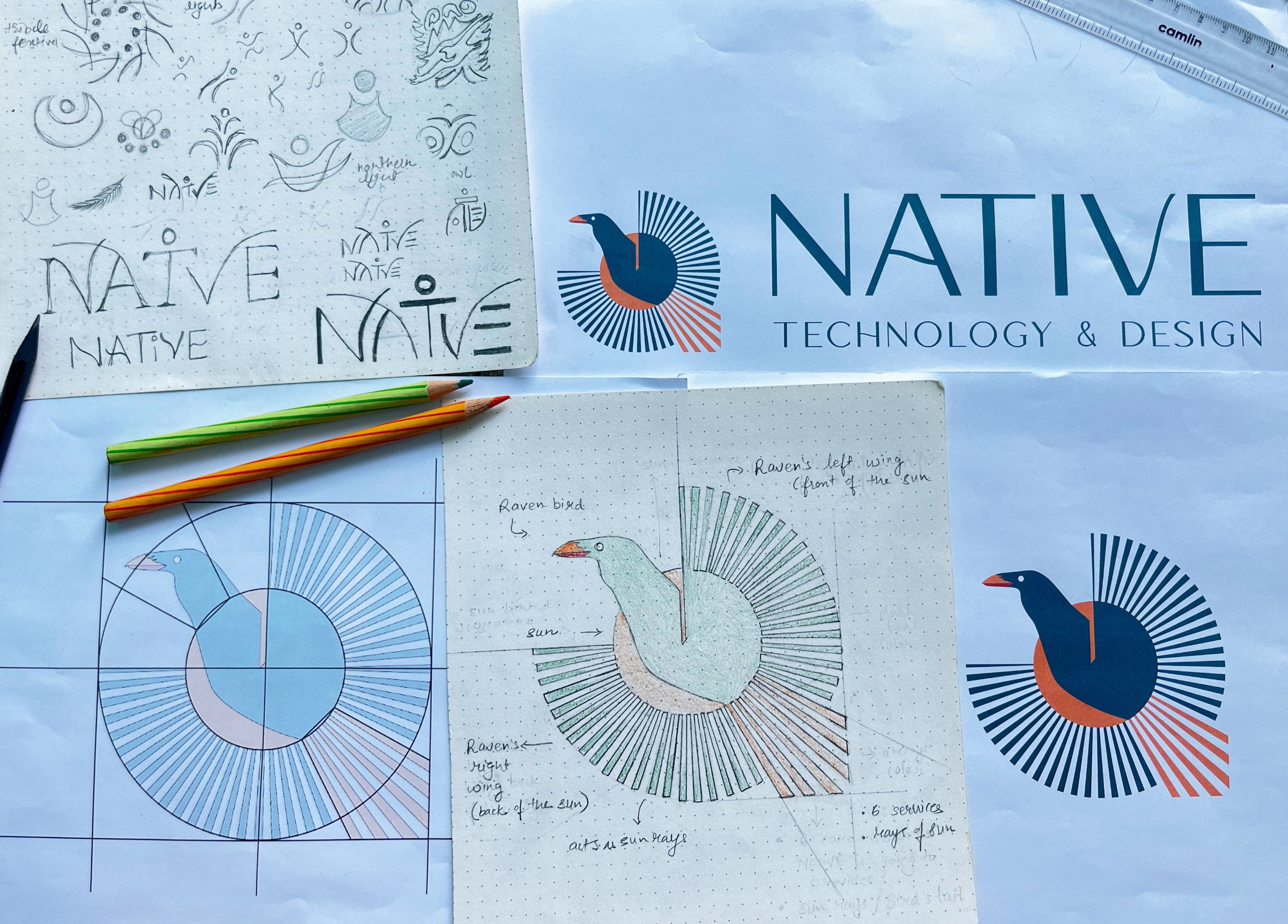
Our creative strategy always starts with people, not technology. When we say our design is humanized before digitalized, we mean every colour, word, and image is grounded in real stories and relationships before it becomes a website or digital campaign. When we create for Canadian Indigenous communities, and especially First Nations, we work to ensure that what appears on screen respects culture, land, and lived experience rather than applying a generic template.
Humanizing design begins with listening to community voices. Before we sketch a logo or map a homepage, we learn about the community’s priorities, protocols, languages, and how people actually access information. We ask how elders, youth, and families will encounter the design: on phones, printed posters, social media, or a community website. This helps us understand not just what things should look like, but how they should feel and function in everyday life.
Drawing from First Nations Traditions
A core part of our creative strategy is drawing from First Nations visual and storytelling traditions in a respectful way. Many communities have rich symbolism, patterns, and colours that convey identity and connection to land. We aim to learn which elements are appropriate for public use, and which are sacred or private. This can involve co-creating mood boards with community members, collaborating with Indigenous artists, or using photography that centres local people and places in a dignified, authentic way. The goal is to reflect each community’s unique identity, not a single “Indigenous” style.
Bridging Culture and Digital
Digital marketing then becomes a bridge between culture and online audiences. We shape campaigns around community goals—promoting cultural events, supporting language revitalization, or growing Indigenous-owned businesses—rather than chasing trends or algorithms. The phrase humanized before digitalized guides these decisions. We begin with people’s needs, values, and voices, then choose the platforms and formats—like Facebook, Instagram, email, or search ads—that can best amplify them without distortion.
Websites, in this approach, are designed as living community spaces rather than static brochures. Navigation is simple and accessible, with mobile-friendly layouts that work in areas with limited bandwidth. Content structure reflects what matters most locally: territorial acknowledgements, cultural protocols, language sections, youth and elder programs, or community news. Visual elements—colours, imagery, patterns—carry through the creative system shaped with First Nations input, so the site feels like a digital extension of the community.
Finally, humanizing design means sharing ownership and responsibility. We treat creative work for First Nations communities as collaborative and ongoing, not a one-time service. That includes clear consent for imagery and stories, opportunities for feedback, and training so community members can update their own website and digital channels. In this way, our strategy supports Indigenous sovereignty and long-term digital stewardship, ensuring that technology serves the community, not the other way around.

- Copyright © 2026 NTD
- Design by Native Technology and Design